Post-Acute Care vs. Senior Living: How the Residential Needs Differ
We approached post-acute care vs. senior living: how the residential needs differ as an editor and buyer would: what can be verified, what can fail, what deserves a pilot, and where a seller’s marketing claim needs a written specification behind it.
If post-acute care vs. senior living: how the residential needs differ were on our own shortlist, we would start with the room, routine and delivery constraints—not brand names—and make every candidate clear those gates.
You can define the use case and measure the space before shopping.
Projects drift when appearance is chosen before access, operations and replacement planning are settled.
Residential Feel, access and circulation, dimensions in writing and responsibility after delivery.
| Decision point | Option / approach A | Option / approach B |
|---|---|---|
| Residential Feel | Option A can work when the constraint is predictable and easy to measure. | Option B may be better when the project needs more flexibility or service support. |
| Access And Circulation | Compare who receives, moves, assembles and replaces the item. | Do not treat the sticker price as the whole operating cost. |
| Change over time | Ask whether the choice can adapt to a new resident, room layout or use. | A lower-flexibility choice can still be right when turnover is low and the use is stable. |
A buyer is asked to furnish a short-stay post-acute unit and a long-term senior apartment with the same package. The team separates the use cases: turnover, length of stay, personal belongings and visitor patterns differ. One standardized package becomes two simpler, better-defined packages.
How the housing model changes the room decision
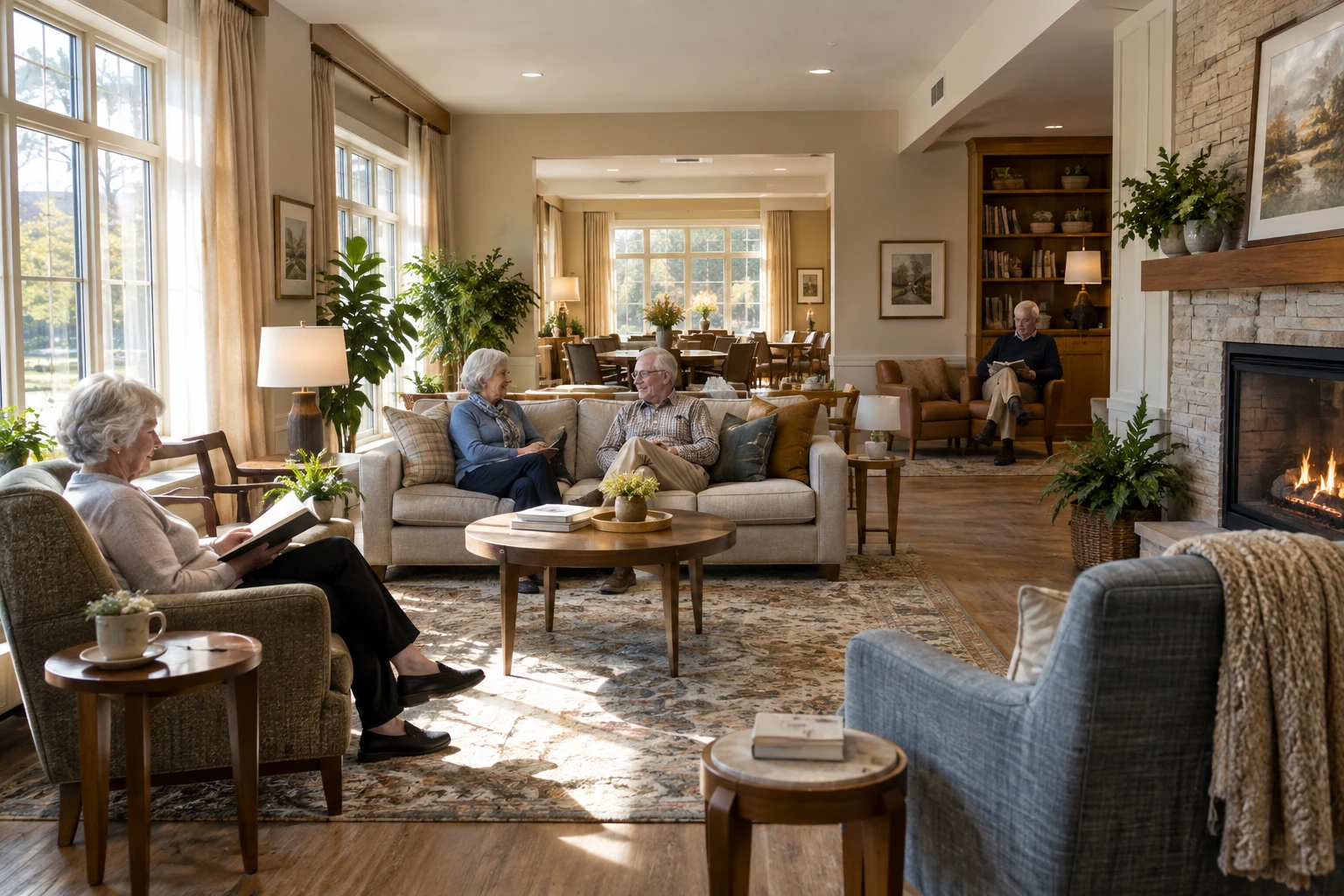
In post-acute care vs. senior living: how the residential needs differ, the residential character is not decoration. Familiar scale, warm materials and ordinary-looking furniture still have to work with documented dimensions, cleaning routines, access and replacement planning.
The deciding condition
Before expanding the shortlist for post-acute care vs. senior living: how the residential needs differ, verify the single highest-risk unknown. One measured or documented answer is more valuable than ten extra product tabs.
Sources & verification notes
We use public sources for definitions, demographics and rules. Product fit still needs project-specific verification.
- National Institute on Aging — Assisted living and nursing homesFederal overview of assisted living, nursing homes and other residential long-term-care settings.
- Administration for Community Living — Profile of Older AmericansAnnual U.S. demographic reference covering the 65+ population, living arrangements, income and health.