Traditional Sofa Delivery vs. Boxed Delivery for Multi-Unit Projects
We approached traditional sofa delivery vs. boxed delivery for multi-unit projects as an editor and buyer would: what can be verified, what can fail, what deserves a pilot, and where a seller’s marketing claim needs a written specification behind it.
The most useful question we can ask about Traditional Sofa Delivery vs. Boxed Delivery for Multi-Unit Projects is not 'what looks best?' It is 'what could make this decision fail after the order is placed?' That changes the conversation from browsing to planning.
The property has tight access, changing room layouts or a reason to value compact delivery.
A small carton does not automatically mean good comfort, durability or easy returns after opening.
Packaged Size, expansion/setup, upholstery/service details and who handles setup.
| Decision point | Option / approach A | Option / approach B |
|---|---|---|
| Delivery access | Compact/boxed formats can reduce the size of the item entering the building. | Traditional sofas may arrive ready to use but can require a wider route and more handling. |
| Setup | May require unboxing, positioning, connection or expansion time. | Often minimal on-site setup after delivery, depending on legs/modules. |
| Flexibility | Modules can be rearranged or replaced individually on some systems. | Fixed frames can feel simpler and familiar. |
| Returns | Opened compressed products may have special return restrictions. | Large-item returns can be costly but may not involve recompression. |
| Decision | Useful when access/flexibility matter. | Useful when conventional delivery and fixed layouts are straightforward. |
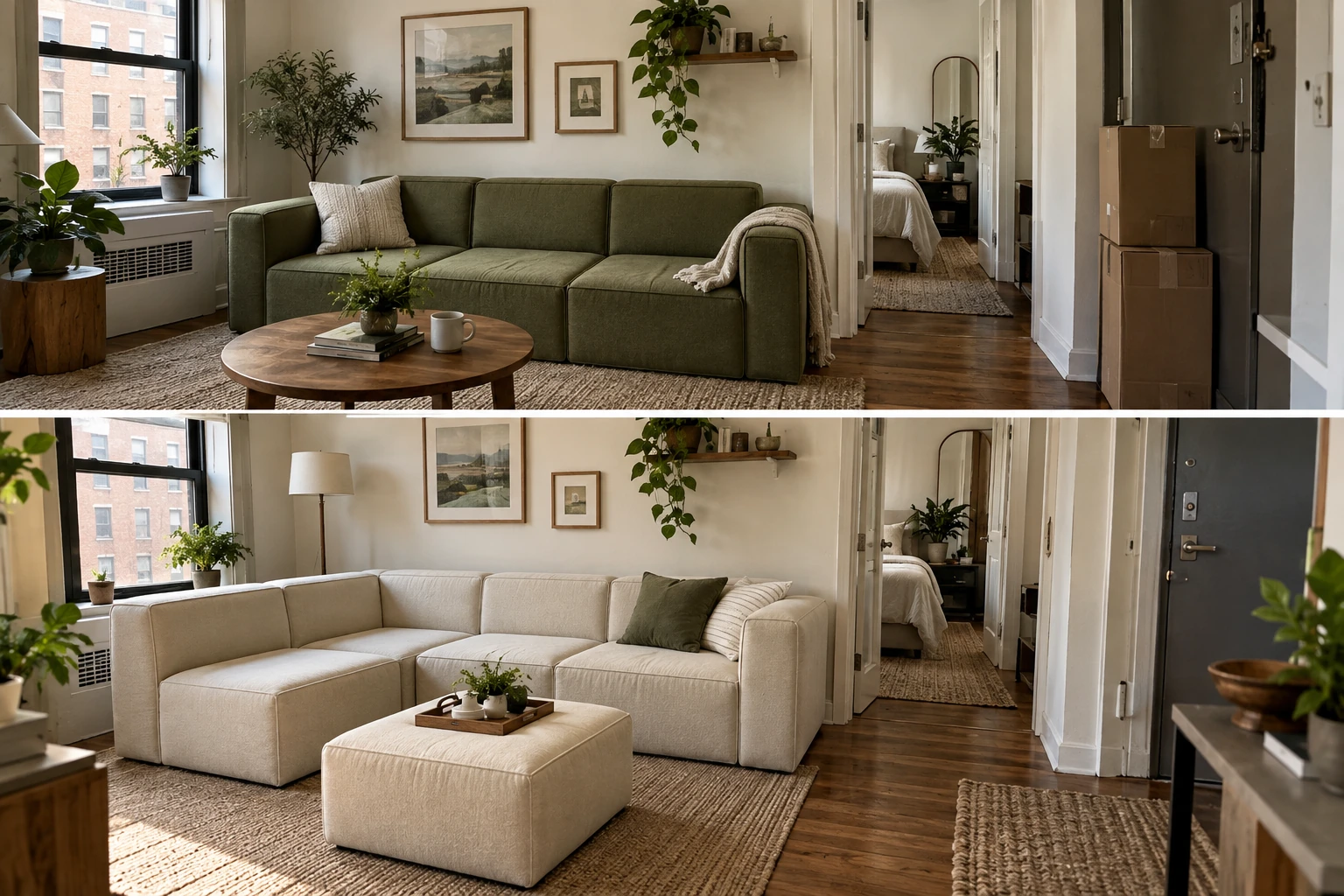
Two projects compare boxed and conventional delivery. The conventional sofa wins in the easy-access suburban building; boxed delivery wins in the older urban property with tight turns. The conclusion is not that one format is better—it is that delivery geometry is part of product-market fit.
When compact or modular seating actually earns a place
In traditional sofa delivery vs. boxed delivery for multi-unit projects, boxed or modular seating earns attention only when it removes a named friction point such as a tight door, elevator, repeated move or multi-unit delivery. Packaging format is not a substitute for comfort, materials, warranty or service.
Conditions that would change this recommendation
Our conclusion on traditional sofa delivery vs. boxed delivery for multi-unit projects is conditional. Reopen it when the actual room measurements, delivery route, facility rules, warranty language or a pilot unit gives you better evidence.
Sources & verification notes
We use public sources for definitions, demographics and rules. Product fit still needs project-specific verification.
- Melo Home — U.S. siteCurrent featured partner site. Product claims, prices, availability and delivery terms should be verified there before purchase.
- Federal Trade Commission — Endorsement guidanceGuidance on advertising and disclosure when a publisher has a material relationship with a featured brand.